How to Write a Song for Your Grandma (Step by Step)

Maya Bennett · Senior Lyricist — Family & Milestone Songs
Updated July 26, 2026 · 15 min read
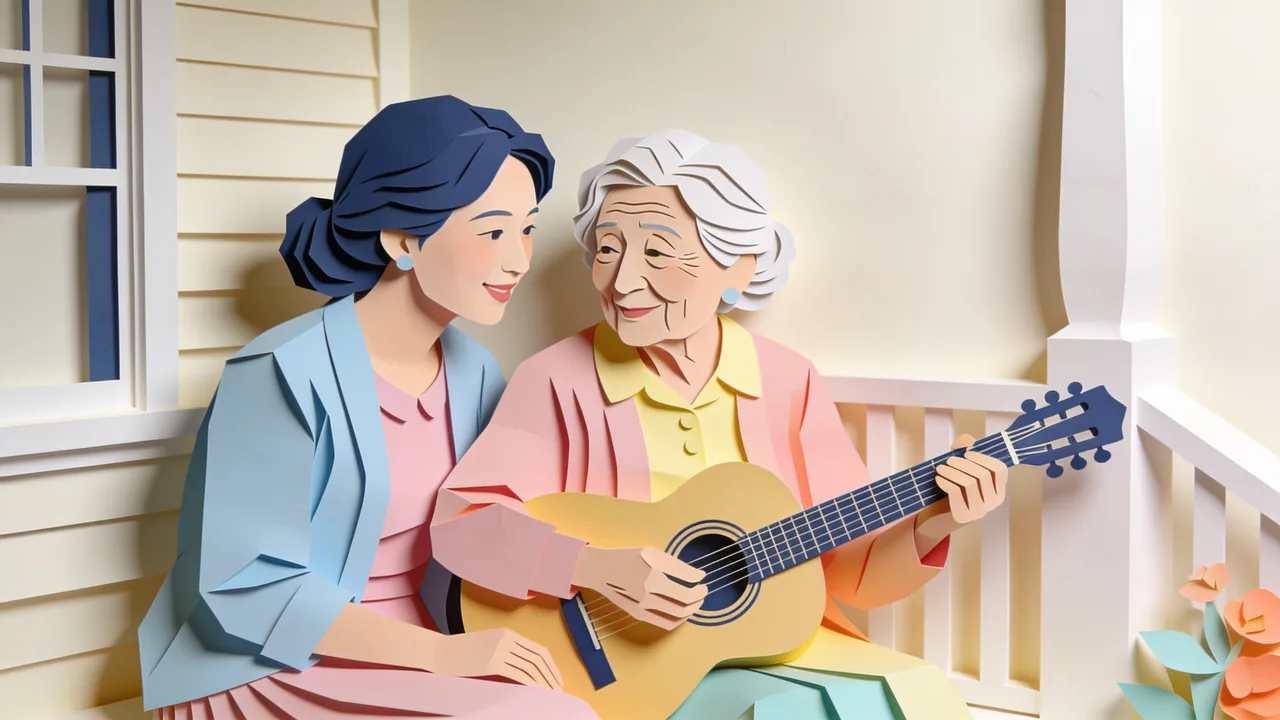
A grandmother collects a whole life of small kindnesses and expects credit for none of them. She fed you when you showed up unannounced, kept the candy drawer stocked, slipped you money your parents told her not to, and remembered exactly how you take your eggs. A song is the one gift that hands all of that back to her — it turns years of quiet spoiling and steady love into something she can hear, and it tells her, out loud, that none of it went unnoticed.
Here is the process songwriters use, adapted for the woman who has been quietly running your family longer than you have been alive. You do not need to read music or play an instrument. Follow these steps in order and you will have a real song — for her birthday, a milestone, a grandparents' tribute, or just because she is still here and you want her to know what she means. If you would rather she hear it professionally sung, we will point you there at the end.
One reassurance before you start: the songs that make a grandmother cry are almost never the polished ones. They are the ones that prove someone was paying attention — that you remember the porch, the recipe, the exact thing she always says. The steps below stand on their own, and if you want to go deeper into the craft of rhyme, meter and melody, our full songwriting guide covers each in detail. For your grandma, technique is the least of it. Specific, unhurried honesty does all the work.
1Gather the small, specific details of her
Before any lyrics, make a list of the concrete, ordinary things — not 'you were always kind,' but the biscuits she makes from memory with no measurements, the exact phrase she says when you walk in the door, the smell of her kitchen, the chair that is unmistakably hers, the way she still calls you a nickname you outgrew twenty years ago. The more specific and everyday, the better it will land.
Push past the generic. Every grandmother is 'sweet' and 'loving'; yours has a particular laugh, a particular superstition, a particular way of spoiling the grandkids that she would never admit to. Think about the era she came from and the world she carried into yours — the songs she hums, the sayings that are hers alone, the recipe nobody has ever managed to write down correctly. Circle the three details that would make her put a hand to her chest.
If the well feels dry, go looking. Flip through old albums, call your parents and your cousins, and trade the 'remember when Grandma…' stories that always spill out once someone starts. Memory is contagious, and ten minutes of that will fill a page. It can also help to skim a list of songs about grandmas and notice which lines catch in your throat — it is never the grand statements, it is always the tiny true things. That is your target.
Tip: Write down the thing she always says — the greeting, the blessing, the warning. Handed back to her in a song, her own words will undo her faster than yours.
2Choose the one thing you want to say
Pick a single message and build everything around it: 'you made everyone feel at home,' or 'I carry the things you taught me,' or 'you are the center our whole family circles.' One honest message beats a long list of every nice quality she has.
That sentence becomes your chorus, so choose the truest one. For a grandmother, the most powerful message is often simply that her steady, unglamorous love shaped the people around her — that the family she quietly held together knows it was her all along.
If you are torn between messages, think about where you both are now. A grandchild who just became a parent often lands on 'now I understand what you were doing.' Someone who moved far away might need 'your kitchen is still what home means to me.' A family marking her ninetieth might reach for 'look at everything your love set in motion.' The right message names this chapter of your relationship, not only the childhood one — much the way a song for your mom tends to shift as you grow, a grandmother song deepens once you are old enough to see what she was really doing.
Tip: Finish this sentence in one breath: 'Grandma, I never told you that…' Whatever comes out is almost certainly your chorus.
3Use a simple verse-chorus shape
You do not need to invent a structure. Verse 1 → Chorus → Verse 2 → Chorus → Bridge → Final Chorus sits underneath nearly every song she has ever loved. Let the verses hold your specific memories and let the chorus hold the one feeling, repeating so it stays with her long after it ends.
The bridge near the end is where you say the grown-up thing — the 'now that I'm older, I finally understand' line, or the promise to pass down what she gave you. Keep it short and let it land in the quiet.
Keep the whole thing modest: two verses of six to eight lines, a four-line chorus you repeat, and a two-line bridge make a complete song of two to three minutes. A familiar shape is a kindness to her as a listener — she is not decoding an arrangement, she is just hearing her own life come back to her in order. Save all your originality for the details and spend none of it on the blueprint.
Tip: Play a song she loves — a hymn, an old standard, whatever she hums — and tap along to its shape. Borrow the architecture; the words stay entirely yours.
4Write the chorus first
Start with the chorus and keep it to something you would actually say to her face, not a greeting-card line. 'Your kitchen still smells like coming home' beats a stack of pretty metaphors. Plain and true is what gets past a grandmother's modesty — she will deflect a compliment but she cannot argue with a memory.
Say it out loud. If it sounds like you talking to her, keep it. If it sounds like a card she has already received a dozen of, go back to your list of specifics and make it unmistakably about her — her porch, her phrase, her recipe, her name for you.
Give yourself permission to write five bad choruses to find the good one. Draft them fast, read each aloud, and watch for the one that changes your own voice when you say it — that catch in your throat is data. Keep every line short enough to sing in one easy breath; if you have to rush the words to fit them in, trim until they sit comfortably.
Tip: Try opening or closing with what you actually call her — 'Grandma,' 'Nana,' 'Gram,' 'Abuela,' whatever is yours. It makes the song hers in a single word.
5Fill the verses with real memories
Spend your best details here. Verse one can go back — a specific scene at her house, a summer, a ritual you did together every visit. Verse two can come forward to now — you grown, maybe with kids of your own, finally understanding what all that quiet care added up to. The contrast of then and now is where the tears live.
Do not force rhymes. A true line that half-rhymes beats a perfect rhyme that flatters instead of remembers. Write the honest sentence first and fix the sound second — she will never notice the near-rhyme, but she will always notice the truth.
Anchor each verse in one scene you can actually picture: the porch swing at dusk, the flour on her hands, the hymn she hummed while she cooked, the drawer where the good candy lived. Senses carry more feeling than adjectives ever will. One vivid scene per verse is plenty; resist the urge to cram her entire life into three minutes — you are painting a room, not the whole house.
Tip: The details only your family would know are the ones that make her cry — the nickname, the recipe, the superstition, the exact sound of her screen door.
6Give it a melody and record it
The melody is already hiding in the way your voice lifts when you read the chorus with feeling. Sing your words to a tune you half-remember, or set four simple chords under them if you play. Keep the verses gentle and let the chorus open up — a grandmother song wants warmth, not fireworks.
Record a rough voice memo the moment it feels right. That imperfect recording is a finished song, and the fact that it is your voice is exactly why it will mean more to her than anything polished. You can keep it homemade, or have it arranged and sung properly — plenty of families end up doing both.
And if you want your words to arrive with a real melody and real vocals behind them, that is exactly what we do. Share her story through a questionnaire that takes about five minutes, and real songwriters will turn it into a custom song for your grandma in a style that suits her — acoustic, folk, gospel, country, soul, or a gentle lullaby. It is delivered within 24 hours, with unlimited revisions and a 30-day 100% money-back guarantee, so the only real risk is making your grandmother cry in the best possible way. If you want to hear what a finished one sounds like first, our sample songs are the fastest way to imagine hers.
Tip: Play it for her over an old photo slideshow — decades of pictures under your words is almost unfair, in the best way.
A worked example: from 'her biscuits' to a chorus
Here is how the steps look in practice. Marcus wants a song for his grandmother, Ruth, for her eightieth birthday. His step-one list reads like a whole childhood: Ruth makes biscuits from memory with no measurements and swats your hand if you reach for one early; she keeps butterscotch candies in a cut-glass dish by her chair; she has said 'well, come here and let me look at you' at the door for as long as anyone can remember; she hummed old gospel songs while she cooked; and she kept a screened porch where the whole family ended up every Sunday until the light went down.
Once the list is on paper, Marcus's one message comes fast: 'your house is where this family learned how to love each other.' Not 'you're the best grandma in the world' — Ruth has heard that on plenty of cards. This message belongs to their family alone, and it is the sentence Marcus has never actually said to her out loud, which is exactly how you know it is the one.
From there the chorus almost writes itself, in plain words Marcus would really say: 'Butterscotch dish and a screen door song / Come here and let me look at you, been that way all along / You never measured a thing but you got the love just right / Grandma, your porch is still where we all come home at night.' It is not fancy, and that is the point. Every line traces straight back to the list, and the small turn in it — the porch as the place the whole family belongs — is what will undo Ruth when she hears it.
The verses then have obvious homes. Verse one lives on the Sunday porch and in the biscuit flour; verse two jumps to now — Marcus grown, teaching his own kids the same hymns, finally doing the math on what those ordinary Sundays were quietly building. The bridge is two short lines built on 'come here and let me look at you' — her greeting handed back to her, with interest. One list, one message, one chorus, and the song is suddenly three-quarters written.
Fitting the song to the moment
The same memories can be framed for very different occasions. A plain birthday song widens the lens to who she is beyond 'Grandma' — her humor, her stubborn streak, the life she built long before you arrived. A big-number or milestone birthday — an eightieth, a ninetieth — calls for a then-and-now song, one long life honored and everything her love set in motion laid out for her to see. And a song from all the grandkids at once is its own kind of magic, because a grandmother song is the rare kind where more voices make it better, not messier.
If you are honoring a grandmother who has passed, the song becomes a keepsake for the whole family, not just a gift for her — a way to keep her sayings, her recipes and her voice alive in something you can play every year. Write it in the present of memory: not 'we miss you' on repeat, but the porch, the biscuits, the blessing she always gave, so that hearing it feels like sitting in her kitchen again. A grandparents-together tribute works the same way, letting one song hold the pair of them and the home they made.
However you frame it, let the grandchildren's perspective lead — the details only they know are the ones that carry the whole thing, and this is one occasion where writing it together is not a compromise but the point.
- Her birthday: celebrate the whole woman, not just the grandma — her jokes, her fight, the things she loves that have nothing to do with the family.
- A milestone (an 80th, a 90th, a golden anniversary): build a then-and-now arc — where she started, what she carried, and everything her love set in motion.
- A grandparents-together tribute: let one song hold the pair of them and the home they built, with a verse for each and a chorus they share.
- From the grandkids: give every grandchild a line or a memory to contribute, so she hears her whole brood inside one song.
- Honoring a grandmother who has passed: keep her sayings and her kitchen alive in the present tense, a keepsake the family can replay every year.
How to give her the song
How she hears it for the first time is half the gift, so stage it. The classic move is a photo slideshow — the song playing under decades of pictures is almost unfair, in the best way. At a birthday dinner or a family reunion, wait until the plates are cleared, ask the table for two minutes, and press play; let the whole family be part of it, because a grandmother is happiest when her people are around her. If she hates being the center of attention, do the opposite and play it for her alone in her kitchen, where she can fall apart in peace.
Give her something to hold, too. A song is the rare gift with no box, so pair it with the lyrics on paper — printed and framed for the wall she passes every day, folded into a handwritten letter, or as a keepsake card with the lyrics and a QR code she can scan to play the song again whenever she misses you. Our Forever Memory bundle does exactly this: a frameable card with the lyrics and a QR code that plays the song, plus a second version in another style. Grandmothers replay the things that matter — make the replay easy, and put it somewhere she will see it daily.
As for which version she hears: a homemade voice memo is precious precisely because it is your voice, and a professionally arranged version with real vocals turns the same words into something she will play for every friend, neighbor and church-group member she has. Plenty of families do both — the raw take from the grandkids, then the polished recording in her favorite style, so she has one to treasure privately and one to show off.
What makes a song for grandma fall flat
The songs that actually reach a grandmother avoid the same few traps:
- Generic gratitude — "you're the sweetest grandma" says nothing; "your kitchen still smells like coming home" says everything.
- Only the highlight reel — the everyday rituals move her far more than the big holidays and the milestone events.
- Sounding like a card — she has read a thousand cards; she has never once heard a song written about her.
- Cramming her whole life in — one focused, vivid memory beats a rushed tour of ninety years.
- Never finishing — a heartfelt voice memo you actually play for her beats the perfect song still in your head.