How to Write a Memorial Song (A Gentle Step-by-Step Guide)

Maya Bennett · Senior Lyricist — Family & Milestone Songs
Updated August 17, 2026 · 25 min read
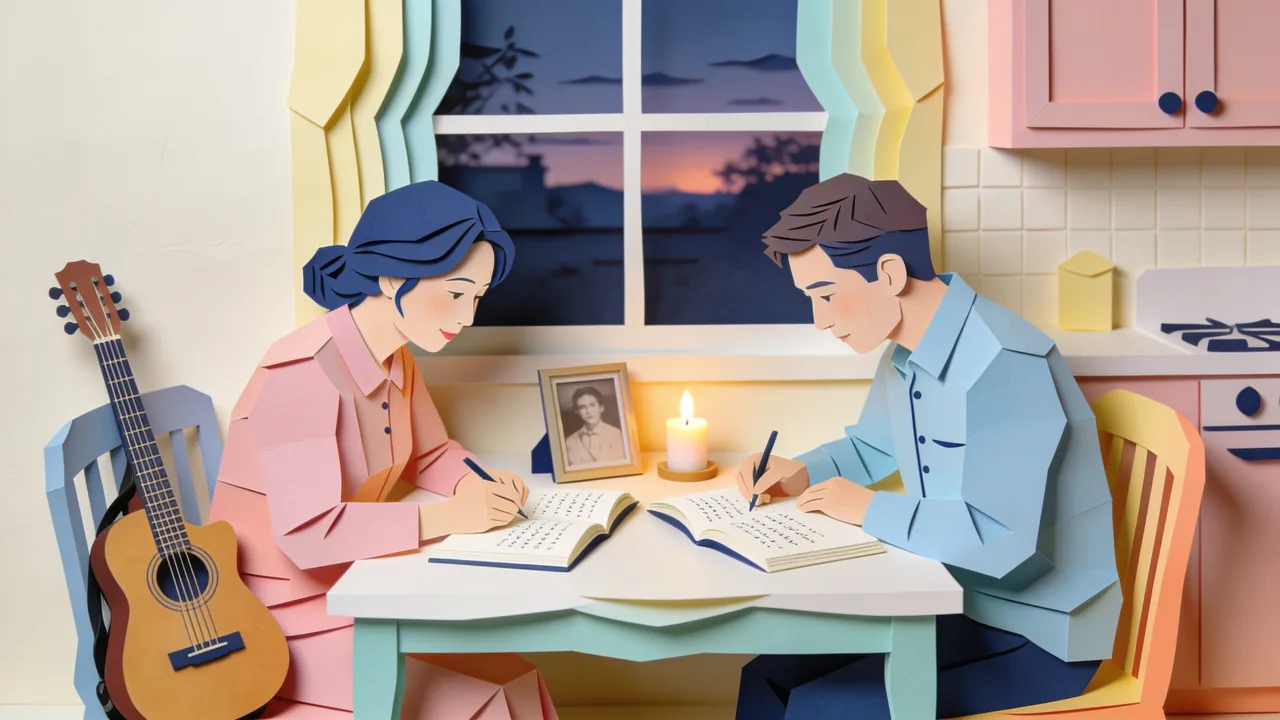
To write a memorial song, begin by collecting small, concrete memories from everyone who loved them — sayings, objects, habits — then choose one true feeling to build on, decide whether the song speaks to them or about them, write the chorus first, and let two verses hold the details. That is the whole method. You do not need to read music, and you do not need to feel ready. It has simply been slowed down here for a stretch of time when nothing else is moving at its usual speed.
A memorial song does a job that a eulogy cannot quite manage. A eulogy is spoken once, to a room, and it has to be fair to a whole life. A song is allowed to be partial. It can be about one morning, one phrase, one chair by a window, and everyone listening will supply the rest from their own memory. That is why families keep playing these songs long after the service is over — on a birthday, on the anniversary, in a car on an ordinary Thursday when the missing arrives without warning. Whatever you make will keep being useful for years, so there is no need to get all of them into it now.
Take this at whatever pace you have. Some people write the whole thing in one sitting a week after the funeral; others open the file every few months for a year and add a line. Both are the same project. If you would like a broader walkthrough of how any song gets built from nothing — where melodies come from, how a bridge works — a plain-English explanation of putting a song together covers that ground for any subject at all. For this one, craft matters less than attention. The song will be good in the way that matters if it proves that somebody was paying close attention to a person who is not here to be looked at anymore.
1Gather the memories before they scatter
Begin by collecting rather than composing. Open a blank note and write down everything ordinary you can still see and hear: the way she said your name when she picked up the phone, the coat that hung by the back door for eleven winters, the diner order he never once varied, the tune he hummed while he shaved. Do not sort these and do not rank them. Forty plain items will serve you far better than five polished sentences about what kind of person they were, because grief turns people into summaries very quickly and a summary is the one material a song cannot use. If the page fills slowly in the first weeks, that is ordinary. Leave the note open on your phone and add whatever surfaces, whenever it surfaces — which tends to be at an inconvenient hour, usually while your hands are busy with something else entirely.
Then ask other people, because nobody holds the whole person. Their siblings remember a childhood you never saw. Their coworkers remember a competence the family always took for granted. Their grandchildren remember somebody gentler, with more time. Send a note to the family thread asking each person for one small memory — not a tribute, one memory — and by morning you will have more than you can use. After years of reading what families send us in the days after a death, I can tell you that the first thing written down is nearly always an abstraction like she was always there for everyone, and that only on the second pass does the real material arrive: the loop of her handwriting on the back of a photograph, the two words he said before hanging up every single time, the bang of a screen door, the smell of sawdust and cold coffee at the top of the basement stairs.
Save whatever exists in their own voice while it is still there to save. Voicemails, video from a birthday, the note left on the fridge, the last thread of texts — that is source material, and it has a way of vanishing once phones are wiped and accounts are closed. Copy it somewhere safe today, even with no idea yet which fragment you might use. It also helps to spend twenty quiet minutes with songs other families have chosen for a service, listening less for the sentiment than for the scale of the detail; the ones that work are almost never the sweeping ones. When your list feels full enough, mark the three entries that made you stop for a moment while you were writing them down. Those are usually where the song is hiding, and everything else on the page is there to hold them up.
Tip: Ask each relative for one memory and one object. Objects come with a place, a season and a sound attached, and all three end up in the lyrics.
2Settle on one true feeling, not a whole life
A whole life will not fit, and trying to make it fit is what leaves most memorial songs sounding like a program note. Choose one feeling and let everything else serve it. Real ones people land on: the house still runs on your habits. I am not finished talking to you. Thank you for a childhood I did not know was expensive. You were happy at the end and I got to be there. I keep reaching for the phone. Any of those can carry three minutes. None of them requires you to be fair to the whole eighty years, which is a relief, because being fair to eighty years is the job of the eulogy and it is a job nobody enjoys. Write your candidates as plain sentences on one page, with no attempt at lyric language, and read them next to each other.
The feeling does not have to be sadness, and it certainly does not have to be resolved. Songs made in the first year are often mostly gratitude with something unfinished underneath, and that mixture is more honest than a tidy farewell nobody actually feels yet. Relief is allowed, if the last months were hard. So is a kind of exasperated affection — the arguing, the stubbornness, the advice you did not want. If your feeling is simply that the absence is constant and does not seem to be shrinking, that is a legitimate song too, and it belongs to the same family as songs about missing someone who is no longer here. Whatever you choose, choose the one you would say to a friend at midnight rather than the one you would say at the podium. The podium version is fair to everybody and moves nobody, and you can hear the difference within a line and a half.
Who the person was to you narrows it further. A song for a parent tends to land on inheritance, or on the cost of things you only priced correctly later. A song for a spouse is often addressed straight to them and needs no explaining, because it was already a private language. A song for a child almost never tries to be about the whole life at all; it holds one small habit and refuses to let go of it, and that restraint is what makes it bearable to play. A song for a friend can be funnier than anyone expects, and often should be, since a friendship is usually built out of jokes nobody outside it would understand. None of these are rules, only tendencies worth knowing before you spend a week on the wrong one. Say each candidate sentence out loud with their name in front of it. The one you cannot finish saying is generally the one the song is about.
Tip: Write the sentence down before you write any lyrics, and keep it visible. Every line you draft afterward either serves that sentence or belongs in a different song.
3Decide whether you are speaking to them or about them
This choice shapes every line, so settle it before drafting. Speaking to them makes the song a letter: second person, direct address, and considerably harder to sing without stopping, because you are holding a conversation with somebody who cannot answer. Speaking about them makes it a portrait: third person, told to whoever is listening, steadier under pressure and the natural choice when a room will hear it. Both are honest. What does not work is drifting between them, because the listener loses their footing and stops trusting where they are standing. Tense works the same way. Present tense keeps them in the room — he still takes the long road, she still overfills every plate — and the ache comes from the listener knowing otherwise. Past tense sets the loss down and turns the song into a record of somebody who was here. Choose one stance and one tense, then hold both all the way to the final line.
Then borrow a shape rather than inventing one. A verse, a chorus, a second verse, the chorus again, two lines of bridge, and one final chorus is the frame under almost everything anyone has ever cried to, and a grieving room needs that predictability more than any other audience. People who are barely holding on cannot follow a structure that surprises them; they need to know a chorus is coming back so they can brace for it, and they need to feel the end approaching several lines before it lands. Be as particular as you like inside the lines and completely conventional about the container, because a grieving audience has no attention left over for a form it has to work out. If you are writing while the person is still with you — a diagnosis, a slow decline, a last summer — the task is different and gentler, and the approach for writing to a grandfather while he can still hear it is the closer fit.
Length deserves a decision of its own. For a service, somewhere between two and a half and three and a half minutes is right; past four, a room that is already exhausted begins to brace instead of listen, and a funeral director will quietly thank you for keeping it tight. A song meant only for the family, played at a kitchen table or sent to a phone, can run longer or shorter and obeys no rule whatsoever — one verse hummed into a voice memo on their birthday counts completely. Wherever it will be played, keep new information out of the last thirty seconds. Nobody should be introduced late, no revelation should arrive in the final line, and the ending should be one the room can see coming and lean into rather than be startled by. A useful test is to read the closing lines to somebody who never met the person: if they can tell the song is finishing before it finishes, you have built it correctly.
Tip: If you are unsure which stance to take, write four lines both ways. The version you can read aloud without stopping is the version you can perform.
4Write the chorus the room can hold onto
Draft the chorus before anything else, using words you would genuinely say. Nobody has ever been moved by ornament at a memorial, and decorated language tends to read as a way of not saying the thing. Four lines is plenty. Keep each one short enough to sing in one unhurried breath, and let the final line repeat itself or return to the opening image so the chorus closes rather than trails away. If a phrase would look at home on a sympathy card sold in any store in the country, set it aside and go back to your list for something only your family owns — a nickname, a doorway, a make of car, the two words they always answered the phone with. Specificity is not a stylistic preference here. It is the entire difference between a song about them and a song about loss in general.
Write it so that other people can join in. This is the one craft decision unique to memorial songs, and most first-time writers miss it: at a service or a celebration of life, the second time the chorus comes around, some of the room will want to sing, and whether they can depends entirely on choices you made while drafting. Repeat the last line. Stay inside a small range of notes, without leaps. Use open, easy vowels on the words you want held. Avoid clever internal rhymes, which are hard to catch on a first hearing and harder still through tears. A chorus that thirty people can half-sing together does something no solo performance manages — it turns a room full of separate griefs into one thing for about twenty seconds. If nobody joins in, the song has lost nothing; but it is worth leaving the door open, because families very often want to and simply cannot find a way in.
Then test what you have, out loud and standing up. Read it to one relative without saying who it is about; if they name the person within two lines, you are finished, and if they hesitate, swap the vaguest line for something physical. Watch what your own voice does as you read. The line that changes your breathing is the one to keep, even if a different line is prettier — prettiness is not what anyone will need on the day. Expect to write four or five choruses before the right one appears, and expect the right one to be the plainest of them, which is disappointing for about a minute and then a considerable relief. If the chorus is arriving in pieces, listening through songs built entirely around somebody's absence can loosen it, since hearing how other writers hold a single feeling for a whole chorus tends to show you what yours is missing.
Tip: Say the chorus quietly to yourself while doing something ordinary — driving, washing up. Lines that survive being said in a plain voice will survive being sung to a room.
5Let the verses carry what a camera could see
Verses are where memorial songs most often go wrong, because a eulogy is the nearest model anyone has and a eulogy is made of achievements. Awards, job titles, years of service, the length of a marriage — all of it true, none of it visible. A verse needs something a camera could photograph and a microphone could pick up. Not she was generous, but the grocery bag of tomatoes left on a neighbor's step without a note. Not he was patient, but forty minutes on a jigsaw with a six-year-old and no sign of wanting to leave. Give each verse one located scene, with a season and a time of day attached, and stay inside it. The moment a verse begins traveling across decades, the listener stops seeing anything and starts politely waiting. Achievements belong in the program and the obituary, where they will be read carefully and appreciated; the song is the one part of the day that is allowed to be small.
Their own words are the strongest material you have, so use them. The phrase they said at the end of every call, the thing they told you before every exam, the joke they made about their own cooking — dropped into a verse or handed back in the bridge, a real saying will land harder than anything you invent, because half the room will mouth it along with you. Write these down now if they are not written anywhere, since sayings blur faster than faces do. If letters or cards exist, read them for rhythm rather than for lines to lift; the way somebody built a sentence is as recognizable as their handwriting. The same instinct runs through the songs families gather around when they lose a mother: what makes them work is almost always a phrase somebody actually said, kept exactly as it was said.
Leave the illness out. The hospital, the diagnosis, the last weeks — that stretch belongs to the family, not to the song, and it is the least characteristic thing that ever happened to the person. Write the Saturday instead: the garden, the radio, the drive they took the long way round. Do not force rhymes onto anything, least of all their name; a name bent into a rhyme is the single fastest way to make a room wince, and near-rhyme has always been perfectly acceptable in a song people are crying through. Get the sentence honest first and repair the sound afterward, or leave a line unrhymed entirely, which in a memorial song reads as plainness rather than as a mistake. Two verses is usually the whole song. A third is almost always one more than the moment can carry, and whatever you leave out is not lost — it becomes something to tell people at the reception afterward, where it will do just as much work.
Tip: Fix each verse to a single day before drafting it — a season, a time of year, how old you were — and do not let it wander. A verse that stays inside one afternoon is the one people can actually see.
6Find the tune, and record it before your voice is ready
The melody is closer than you think, sitting in whatever your voice already does when you read the chorus and mean it. Read it that way a few times and let the reading tip over into singing without formally deciding to. Keep the verses low and conversational, close to speaking pitch, and let the chorus lift a little so the feeling has somewhere to go. Take the tempo slower than feels natural and leave a beat of air at the end of every line; grieving listeners process words more slowly, and rushing is the most common mistake in a first arrangement. Gentle acoustic and folk suit quiet remembrance. Gospel and soul carry grief and gratitude at the same time, which is why so many celebrations of life reach for them. A soft piano ballad suits a life of steady, unremarkable decency. Choose whatever they would have put on themselves.
Then record it, knowing your voice may not cooperate. This is normal and it is not failure. Practical things that help: record early in the morning before the day has caught up with you; sing it through five or six times in private first, because the fifth time is nearly always steadier than the first; record in sections and join them, rather than demanding one unbroken take of yourself; and keep water and a long pause built into the arrangement right after the bridge. If a break stays in the recording, consider leaving it. Families almost never want that edited out. If you truly cannot get through it, ask a cousin, a friend, or a musician from the church to sing it while you sit and listen — writing it was your part, and having somebody else carry it is a completely legitimate way for the song to exist.
And if you would rather not carry the melody and the singing at all, that part can be handed over. You answer a short set of gentle questions, roughly five minutes' worth — the sayings, the objects, the one feeling you want the song to hold — and real songwriters build a tribute written from your family's memories around exactly those details, recorded with real vocals in whatever suits them: acoustic, folk, country, gospel, soul, R&B, pop, or a lullaby if there are small grandchildren. It arrives within 24 hours, with an express option in about an hour when a service is very close. You can ask for changes as many times as you need until every line feels true, and a 30-day 100% money-back guarantee stands behind it, so nothing is riding on you at a time when you already have enough to carry. Whichever way the song gets made, it ends up somewhere the whole family can reach it.
Tip: Record a rough version early even if you plan to redo it. A shaky take you can hear is worth far more than a perfect one still waiting for a day you feel strong enough.
A worked example: from a green sweater on a chair to a chorus
Here is what all six steps look like when somebody actually uses them. Colleen is writing for her mother, Maureen, who died in the spring; the celebration of life is set for a Saturday in six weeks. Her gathering list is deliberately unliterary. Maureen answered the phone the same way for forty years — well, hello, you. She grew more tomatoes than any two households could eat and gave them away in grocery bags with the handles knotted. She rehung the same wall calendar every January and copied every birthday across by hand. There is a green cardigan on the back of the kitchen chair that nobody in the family has moved. She drove with the window down well into October.
The feeling took Colleen two evenings to find, and it was not the one she expected. Her first attempt was we miss you every day, which is true and is also true of every family that has ever lost anybody. What she landed on instead was smaller and stranger and entirely hers: the house still runs on your habits. It is a report rather than a tribute, it explains why she keeps setting out too many plates, and it is the sentence she had not said out loud to a single person. Notice how much easier every later decision became once one sentence was sitting at the top of the page.
The chorus then assembled itself out of the list, in words Colleen would really use, with the last line repeated so the room could come in on the second pass: "You still pick up the phone in my head — well, hello, you. / The tomatoes came in early and I gave the extras out. / There is a green sweater on a chair that no one's going to move. / Mom, the house still runs on you. The house still runs on you." There is nothing clever anywhere in it. Every picture came off the list she made in the first week, and the closing line is short enough, and repeated often enough, that thirty people who cannot sing will manage it anyway.
The verses had obvious homes after that. Verse one sits in one August afternoon: the back step, the knotted bags, the neighbor's screen door, a nine-year-old sent down the street with tomatoes she did not want to carry. Verse two moves to this spring, the same kitchen, the calendar still on the wall with April's birthdays in her handwriting. The bridge is two lines built on well, hello, you, handed back to her. One list, one sentence, one chorus — and three-quarters of the song existed before Colleen touched an instrument.
Where the song belongs: the service, the celebration of life, and the years after
A funeral service and a celebration of life ask for different songs from the same material. A traditional service is formal, tightly timed and often held in a church, so the song should be gentle, unhurried and roughly three minutes, with a shape the room can follow without effort. A celebration of life gives you much more room: it can be warm, it can be funny in places, it can name the stubbornness and the terrible driving and the thirty-year argument about the thermostat. Ask the family which of the two they are actually planning, because the word on the invitation does not always match the temperature of the room, and the temperature is what your song has to match.
Placement inside the order of service matters more than most people realize. As guests arrive and are seated, the song plays as atmosphere and few will listen closely. Right after the eulogy, it becomes the emotional weight of the whole hour and everyone will listen to every word, which is the strongest position and the hardest one to sing in. Under a photo slideshow it works beautifully and asks nothing of anyone. At the very end, as people file out, it sends them home carrying it. Whoever introduces it should not be the person who wrote it: ask a celebrant, a minister, or a steady-voiced cousin to say one short sentence — who wrote it, who it is for, and that the family would like everyone to simply listen. Then let it play.
The years afterward are where these songs quietly do most of their work. The first birthday without them, the first anniversary of the death, an empty chair at a holiday table, a wedding they should have been at — families reach for the recording on all of those days, and a song written for one service turns out to serve a decade. That is a good reason to keep the lyrics slightly less tied to the funeral than instinct suggests. If you are writing for a father, the memorial songs families gather around for a dad show how that longevity is built; for a mother, the same quality runs through many of the songs written about moms, which stay playable long after the day they were made. And a song about a grandparent often ends up belonging to the youngest cousins most of all — a tribute built around a grandfather tends to become the way great-grandchildren meet him at all.
- A traditional funeral: gentle, around three minutes, predictable shape, nothing new in the final lines.
- A celebration of life: warmer and more specific — the humor, the habits, the arguments everyone secretly misses.
- During a slideshow: let the song sit under the photographs and keep the lyrics uncrowded so both can be heard.
- After the eulogy: the strongest placement and the hardest to sing live, so have the recording queued either way.
- A graveside or scattering: shorter still, one verse and a chorus, played from something with a real speaker.
- The first anniversary or a birthday: write it so it survives the service — a song about them, not about the day they were buried.
Playing it for a room that is grieving
Test the sound before the day, without exception. Ask whoever runs the venue what you can plug into, then go and try it — a phone held near a microphone is the most common failure at memorial services, and nothing undoes weeks of work faster than a room straining to hear the words. Download the file rather than relying on streaming, since chapels and funeral homes are notorious for poor signal. Put the phone in airplane mode so no notification arrives mid-song. Set the volume with someone standing at the back of the room, and hand the playing to a person who is not you, so that when it starts you can sit down with your family instead of watching a screen.
Say very little before you press play. Two sentences is plenty: who the song is for, and one line about why it exists — she said well, hello, you every time she answered, so that is where it starts. A long introduction makes people brace, and braced people cannot be moved. Then let it run all the way through without commentary, and let the silence afterward last as long as it lasts. Somebody will cry audibly. That is not an emergency and it does not require managing. Grief in a room is the entire point of gathering, and a song is one of the few things that gives it somewhere to go.
Afterward, send it to everyone who could not travel. Someone is always missing — a brother overseas, a friend too unwell to come, a cousin who could not get the days off — and a private link they can open at home, alone, at whatever hour suits them, matters enormously to the people who could not be in the room. A song delivered on a private page can be played, downloaded and passed around the family without anyone needing an account, and it can be added to a service program or an obituary page just as easily. If you would like a sense of how a finished, fully arranged tribute actually sounds before deciding anything, listening to a few finished songs is the quickest way. Many families keep both versions in the end: the home recording in your own unsteady voice, and a properly sung one to play every year.
What makes a memorial song fall flat
Memorial songs tend to fail in the same few ways, and every one of them is avoidable with a decision made early:
- A eulogy set to music — job titles, dates and years of service are for the program; the song needs the tomatoes and the screen door.
- Trying to cover an entire life — one afternoon held still will always move a room more than eight decades summarized in three minutes.
- Borrowed religious framing nobody earned — if they did not talk about heaven, a chorus about heaven will sound like somebody else's song at their funeral.
- Length — past four minutes an exhausted room stops listening and starts enduring, and the words you worked hardest on are the ones that get lost.
- Forcing a rhyme onto their name — a bent name is the one thing everyone hears, and no rhyme is worth the wince it causes.