How to Write a Retirement Song for a Coworker, Teacher or Dad (Step by Step)

Caleb Turner · Head Songwriter & Creative Director
Updated September 25, 2026 · 24 min read
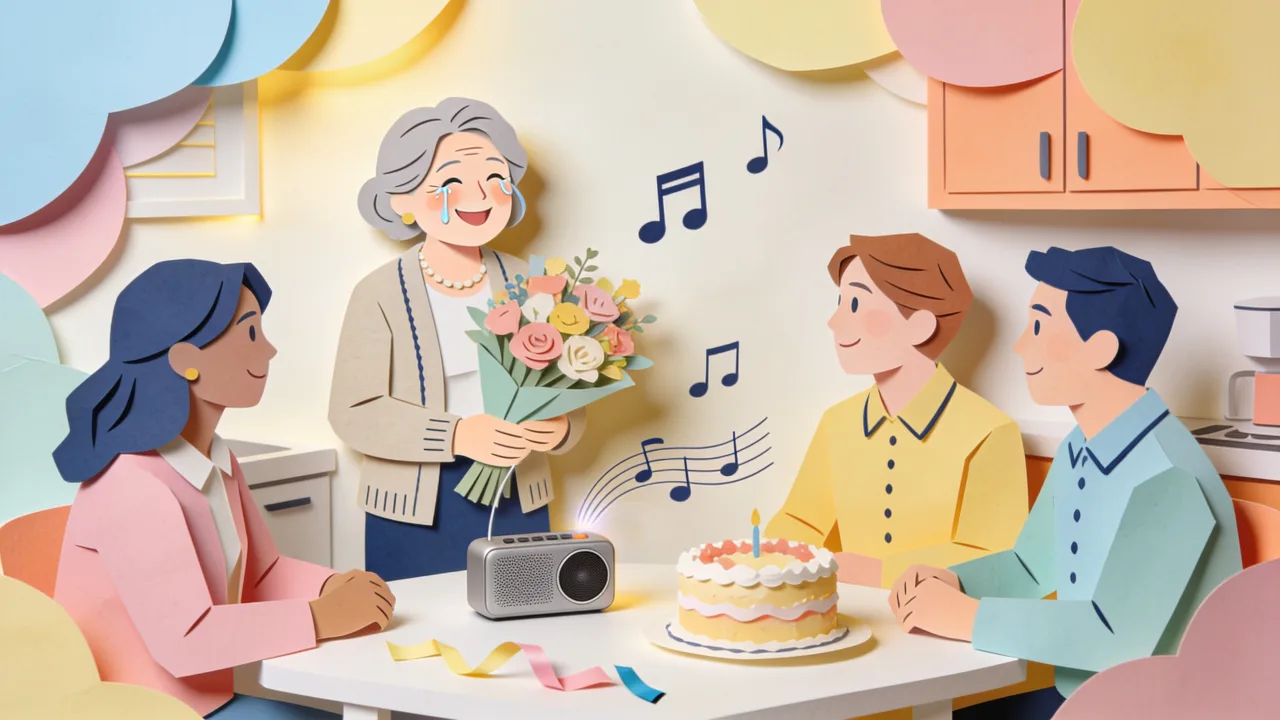
To write a retirement song — say, for a bus driver hanging up the keys after thirty-two years — pick one habit the job left on them, decide whether the room should laugh or cry, write a plain four-line chorus, add two verses (the working years, then what comes next), and sing it to a simple tune.
A retirement is a strange thing to celebrate, because the person at the center of it is usually half proud and half unsure who they are without the badge, the route or the classroom. Coworkers want to roast them. Family wants to thank them. The retiree mostly wants the speeches to end before they cry in front of the accounting department. A good send-off song has to hold all three of those at once, and it can, as long as it stays short, stays specific, and remembers that the career was only the setting. The person is the subject. Nobody is going to replay a song about a job title; they will replay a song about the woman who knew every kid on her route by their backpack.
The step people skip most often, in the retirement briefs I work from, is choosing the tone: they send me three decades of highlights and never decide whether the party should laugh or go quiet, and the draft that comes out of that tries to do both in every line and manages neither. So this guide makes that choice early and keeps it. The six steps work for a coworker at the office party, a teacher on the last day of school, a boss, a pastor, or a mom or dad closing out a long working life. If you want a sense of what already gets played at these parties before you write your own, the records people cue for a send-off, from the walk-up to the slideshow are a useful warm-up. Prefer to pass the details to a professional songwriter and let a trained singer record it? That route is near the bottom of the page.
1Find the story inside the career
A career is too big to sing, so the first job is shrinking it. Set a timer for twenty minutes and list everything the job left on this person that has nothing to do with their title: the travel mug with the chipped handle, the way they answer the phone at home with their extension number, the parking spot nobody else would dream of taking, the joke they told every new hire for fifteen years. Then list the scenes. The blizzard morning they drove the route anyway. The retirement of their own mentor, when they gave the toast. The year the plant nearly closed. Give every scene its own few sentences, and anchor each in a location, an hour and one thing you could hold. You are looking for moments a camera could have caught, not qualities. Dedicated, reliable and hardworking describe half the building; the mug with the chipped handle describes one person.
Retirement songs have an advantage most gift songs do not: dozens of witnesses. Use them. Send a short message to four or five coworkers asking for one memory each and one habit they will miss, and set a deadline a week before you need it, because the best stories always arrive last. Ask the spouse or grown kids a different question: what does the job look like from the kitchen table? Families see the other side of a career — the uniform on the chair at six in the morning, the missed recitals, the stories about difficult customers repeated every Thanksgiving. That view is gold for a song, and it is the reason a retirement tune written from a son or daughter feels so different from one written by the office, much like a song written for a father who spent his life working usually leans on what he carried home rather than what he did on site.
Now line up everything you collected and circle the three details that could only belong to this person. Then ask which one the retiree would be most surprised you know. That surprise is the heart of a send-off, because people who work for decades rarely believe anyone was paying attention to the small stuff. The teacher does not expect anyone to remember she kept a jar of pencils for kids who forgot theirs. The mechanic assumes nobody noticed he whistled the same three bars under every truck. Hearing a small habit sung back in front of the whole room tells them the years were seen, not just counted. Keep the rest of the list; half of it will end up in the verses, and the leftovers make excellent material for the card that goes with the song. Nothing you gathered is wasted.
Tip: Ban the words dedicated, hardworking, legend and years of service from the first draft. If a line only works with one of them, the real detail is still missing.
2Pick one feeling: roast, thank-you or new chapter
Retirement songs come in three basic moods, and the chorus gets sharper the moment you commit to one. The roast is affectionate teasing: the legendary coffee, the refusal to learn the new software, the golf game they will finally have time to ruin. The thank-you honors what they gave: the rookies they trained, the patients they sat with, the class that became better readers because of them. The new chapter looks forward: the camper van, the grandkids, the garden, the mornings with no alarm. Put the mood you chose into a single ordinary sentence at the top of your notes, then say it out loud starting with their first name. Would you really say that to them over cake? Then it stays. If it sounds like a plaque, rewrite it until it sounds like you. A tone you can say comfortably is a tone you can sing comfortably, and that matters when your knees are shaking at the podium.
Each mood shapes the whole song. A roast wants quick lines, a bouncy tempo and a chorus the whole team can shout, and it only works if every joke is one the retiree would tell about themselves. A thank-you wants a slower tempo, a before-and-after shape and room for one line that admits the workplace will not be the same. If that is the direction you are leaning, our guide to writing a thank-you song for a teacher, nurse or mentor goes deeper on finding the single moment the help happened. A new-chapter song is the lightest to carry and the easiest to share with a mixed crowd, because it is about hope rather than loss, and it gives the retiree something to look forward to on the drive home instead of something to miss. It is also the safest choice when you do not know the person well.
Most good retirement songs do end up touching two moods, and that is fine as long as one of them owns the chorus. The pattern that works best in a room full of coworkers is funny verses and a sincere final chorus: the jokes loosen everyone up, and the turn at the end lands harder because nobody saw it coming. The reverse rarely works; a tearful opening followed by jokes feels like the song lost its nerve. Consider the setting too. A sentimental ballad about thirty years of night shifts can pull an office party into a mood it was not ready for, and a pure roast played at the family dinner can feel like the kids missed the point. Choose the mood that fits the room where the song will actually be heard, then let the other one appear once, briefly, near the end.
Tip: Finish this sentence out loud without stopping: "What I really want them to hear on their last day is…" The first half-sentence out of your mouth usually tells you the mood.
3Choose a short shape the room can follow
You do not need to invent a structure. Verse, chorus, verse, chorus, a two-line bridge and a final chorus is the shape under most songs anybody can hum, and it suits a send-off because the chorus gets to repeat the point three or four times while people are still finding their seats and refilling their drinks. Before drafting anything, hand every section an assignment. The opening verse carries the working years, told through one or two of the details you circled in step one. Verse two holds what comes next: the lake, the workshop, the grandkids, the quiet morning. The chorus holds the mood sentence. The bridge, if you use one, is where the single most surprising detail lives. For a fuller walkthrough of how those parts fit together in any kind of song, the general six-step songwriting guide covers the same skeleton from scratch.
Length matters more at a retirement party than almost anywhere else, because the song is competing with open bars, a slideshow, cake and at least three speeches. Aim for two to three minutes, and reach the chorus within the first forty seconds. Two verses of four to six lines are plenty; a third verse almost always turns into a list of career milestones. If the song is for a quieter setting — a family dinner, a small team lunch, a private recording the retiree will play in the car — it can breathe a little more, but it still rarely needs to run past three minutes. Nobody has ever complained that a retirement song was too short. Plenty of people have quietly checked their phones during the fourth verse of one that was not. If you are torn between two verses, keep the one with the smaller detail and cut the other.
Decide early whose voice the song is in. Written as I, from one person, it feels intimate and suits a spouse, a son or a former student. Written as we, from a whole team, it welcomes everyone but blurs easily. Team versions hold together best when the chorus says we and the verses belong to named people, each contributing one line with one concrete memory: the rookie they trained, the manager they outlasted, the customer who asked for them by name. The result feels less like a group card set to music and more like a line of witnesses, each handing the retiree a different memory to recognize. Collect those lines in a shared note so one person can edit them into a single voice before rehearsal. That editor should be ruthless about length, trimming each contribution to a single singable line, and gentle about credit, so every contributor can still hear their memory in the finished song.
Tip: Sketch the plan on one index card: the working years, the one surprising detail, the mood, what comes next. If a line you love fits none of the four, move it to the card.
4Start with a plain-spoken chorus
Draft the chorus before anything else, since the room will hear it three or four times and the part the retiree will be humming the next morning. Take your mood sentence and say it the way you would if you had thirty seconds with them in the parking lot. Thirty-two years and never missed the bell is a chorus line. Your journey of dedication has inspired us all belongs on a certificate. Retirement pulls writers toward grand language because a whole career feels grand, but the retiree has already been handed that language by HR, on the cake and in the group card. What they almost never hear is one small, checkable fact said back to them with affection. Let the tune do the lifting. The chorus only has to be specific enough to belong to one person and simple enough to sing without reading it off a phone.
If the page stays blank, use a four-line frame. Line one: the detail that could only be theirs, compressed to a single image. Line two: the span of time, said plainly — thirty-two years, nine principals, four different company logos. Line three: what comes next, in one concrete picture. Line four: the mood sentence, with the name everyone at work actually calls them attached. Draft five versions of that frame fast rather than polishing one, then read each out loud at a normal speaking volume. Cross out any line that would fit another coworker, another teacher, another boss. Cross out anything you could not say while looking straight at them. The line that survives is usually the plainest one on the page, and it is rarely the clever one you were proudest of when you wrote it. Keep the runners-up; one of them may become the bridge.
Before moving on, test the chorus for repetition and for breath. Copy it four times down a page and read the stack. A good send-off chorus gets warmer with each pass, because every verse gives the same words more to carry; a weak one starts to sound like a slogan. Then sing every line and check whether your breath gives out before the last word. Long clauses look meaningful on paper and fall apart in a nervous voice at a podium. If a whole department is going to sing it, check the range: hum the lowest and highest notes, and if anyone would have to strain, move the tune down and leave the words exactly as they are. A chorus that thirty coworkers can shout with confidence beats a prettier one that only two of them can reach. The last chorus is the one people remember, so make sure the loudest voices can land it.
Tip: Put their workplace nickname — Coach, Chief, Mrs. D, the Captain — at the start or end of a chorus line. It turns a song about retirement into a song about them.
5Write two verses: the working years, then what's next
Verse one belongs to the career, and it should move slowly through one or two scenes rather than racing through a résumé. Choose a place, a time of day and an object from your list, and describe only what a camera could have caught. The loading dock at five in the morning with the radio on. The staff room microwave with their name taped to the leftovers. The front seat of the bus in February, heater roaring, route sheet clipped to the visor. If the scene needs context for the room to follow, add one small detail that pins it down rather than an explanation. The workplace quirks your coworkers mentioned belong here too, and one gentle joke in verse one lets the room relax before the chorus asks anything of them. If humor is how the team talks, funny songs about best friends show how teasing and warmth can share the same lines.
Verse two jumps forward to the next chapter, and the gap between the two scenes is where the feeling lives. Show a morning after retirement as specifically as you showed a morning at work: coffee on the porch with no lanyard in sight, a fishing rod in the truck bed instead of a toolbox, a grandchild's school play attended at two in the afternoon on a Tuesday. This is where the spouse and family perspective from step one earns its place. A line about the partner who has been waiting thirty years to have them home for lunch, or the dog who cannot believe its luck, grounds the future in people rather than in a brochure. Keep the verse concrete; the temptation is to announce that they deserve this rest, and the chorus already does that work. Let the picture of the porch or the fishing rod make the argument for you.
Hold each verse to roughly four to six lines, and do not chase exact rhymes. A near rhyme on something that really happened is worth more than a clean rhyme that bent the facts, and a retirement song is heard by a room full of people who were there — they will notice if the story gets reshaped for the sake of a sound. When the verses are drafted, try them cold on a coworker who knows the retiree. A laugh of recognition or a sudden silence means you are nearly there. A polite "that's cute" means the lines are still generic, and what fixes them is a tinier memory, not a louder emotion. Avoid inside jokes only two people in the building understand; a line the whole room gets is worth three that need explaining afterward. The retiree should hear the verses once and recognize every scene.
Tip: Give verse one an object from the job and verse two an object from the next chapter — the time clock and the porch swing, the whistle and the fishing reel. The pairing does the storytelling for you.
6Find the tune, rehearse it and record it
Here is where you decide between a parody and an original. The office tradition is to write new words to a tune everybody already knows, and for a private send-off it is quick and fun because nobody has to learn a melody. Just know the tune still belongs to whoever wrote it. Singing your version at the party is one thing; selling it, releasing it or posting it as your own work is another, and it needs permission from the rights holder. Traditional melodies such as "For He's a Jolly Good Fellow" or "Auld Lang Syne" are old enough to be in the public domain. An original tune is often easier than people expect: read your chorus aloud several times, notice where your voice naturally rises, and exaggerate that shape until it turns into singing. You will end up with a melody nobody else owns, which also means you can share the recording however you like.
Whichever route you take, sing the verses close to speaking pitch and lift the chorus a few notes above them; that rise is the signal to a room that this is the bit to join. Three or four chords on guitar or piano are plenty; a steady tap on the table works if you do not play. Match the style to the retiree rather than to yourself: country for the foreman who tells long stories, gospel for the church secretary, folk or acoustic for the quiet librarian, soul or R&B for the manager with the legendary car playlist, upbeat pop for a teacher whose students will sing along. Then rehearse more than feels necessary. Nerves at a podium eat about a third of your breath, and a song you have sung twenty times in the car will survive that far better than one you have sung twice.
Record it before you decide whether it is good enough, even if you plan to perform it live. Sit in a quiet room, prop your phone up and do three takes without stopping; the middle one usually sounds most like you. If you would rather the retiree hear the story with a full arrangement and trained voices, you can also have our songwriters write their send-off song from your details. You spend about five minutes on a questionnaire about the career, the habits, the mood and their taste in music; a real songwriter shapes an original from it, and real singers record it as acoustic, pop, country, R&B, soul, gospel, folk or lullaby. Expect it within 24 hours (express can be as quick as one hour), change it as many times as you like, and lean on the 30-day 100% money-back guarantee if it misses.
Tip: Make a simple guide recording — your voice and a tapped beat — and send it to everyone performing. Groups that rehearse from one recording sing one melody instead of six slightly different ones.
A worked example: from "thanks for your service" to a chorus for a bus driver
Here is the whole method on an invented case, so you can see each decision. Loretta has driven school bus route 14 in a small Ohio district for thirty-two years, and she retires in June. Her colleague Janet, a dispatcher who has worked beside her for nineteen of those years, wants to sing something at the district's end-of-year breakfast. Her first attempt at a chorus went where most first retirement drafts go: "Thirty-two years of service strong, / you've been with us so very long, / now it's time to take your rest, / Loretta, you're the very best." It is warm, it rhymes, and nothing in it belongs to Loretta. Swap in any name and it still works, which is exactly the problem step one exists to fix.
So Janet set the timer and texted four drivers and Loretta's daughter. The details that came back were all small. Loretta knew every kid's name by the second week of school, and she knew them partly by their backpacks. She kept a shoebox of spare mittens under her seat every winter. She honked twice, always twice, at the Millers' farm because their grandson took forever at the end of the lane. Her daughter added the family view: for three decades, Loretta's alarm went off at 4:50 a.m., and she has already announced she will sleep until seven on the first Monday of September just to prove she can. The mood was obvious once the details were on the table — mostly a thank-you, with a light new-chapter ending.
The rewritten chorus, invented for this example, took about forty minutes: "Two honks at the Millers' gate, a shoebox full of mittens, / thirty-two Septembers and she never lost a name. / Come Monday morning, Loretta's sleeping in till seven — / route 14 won't ever run the same." Line one is the detail only she owns. Line two is the span, said plainly. Line three is the next chapter, with a smile in it. Line four is the thank-you, told from the route's point of view rather than as a speech. Verse one became a February morning with the heater roaring; verse two became September, the alarm switched off, and Loretta's coffee going cold on the porch because she finally has time to let it. Janet sang it at the breakfast with the drivers joining on the chorus, and someone filmed it on a phone. Loretta, she reports, has watched it more than once.
Fitting the song to the moment: office party, family dinner or last-day assembly
The six steps stay the same everywhere; what changes is the mood, the length and who sings. At an office party, the room is mixed — close friends, people from other floors, a boss or two — so favor a roast-leaning song with one sincere turn at the end, keep it under three minutes, and make the chorus easy enough for the team to join by the second pass. This is also where parodies live most comfortably, because everyone already knows the tune. At a family dinner, the room is small and the history is long, so a slower thank-you or new-chapter song works, and the verses can reach back into what the career cost at home. If the retiree is your father or mother, our guide to writing a song for your dad covers how to say it to a parent who would rather talk about anything else.
A teacher's last-day assembly is its own format: a crowd of students, short attention spans and a principal holding a microphone. Keep lines short, write the chorus in plural we so a whole grade can sing it, and let small groups take turns on verse lines about their own memories of that classroom. Pitch the melody low enough for young voices. Teachers collect mugs and cards by the hundreds, so a song naming one real classroom habit will stand out, and if the gratitude side matters most, a song written to thank the teacher who changed things is worth considering. For the rest of the program, a playlist built around the slideshow and the last bell can fill the time before and after your song.
On funny versus sentimental: neither is better, but each has rules. Funny works when every joke is one the retiree would happily tell about themselves, and it fails the moment it touches health, age in a way that stings, or anything to do with how they left. Sentimental works when it stays specific and short, and it fails when it turns into a eulogy for someone who is very much alive and about to go fishing. A group sing-along works best with a chorus of four short lines, lyric sheets or a screen for the words, and one confident singer leading so the room has someone to follow.
- Office party: roast-leaning, one sincere turn at the end, under three minutes, parody tune is fine for the room.
- Family dinner: thank-you or new chapter, slower tempo, verses can include what the job cost at home.
- Teacher's last-day assembly: short lines, a we chorus, small groups on the verses, a low key for young voices.
- Boss or manager: gentle teasing about their famous habits, plus one line on what they built or who they trained.
- Group sing-along: four-line chorus, words on a screen or sheet, one confident lead singer.
- Parody vs. original: a borrowed tune is fine to sing at a private send-off, but share or sell only an original.
How to deliver it: who sings, when it plays, and who else hears it
Decide who performs before you rehearse. A single confident singer — a coworker who does community theater, a grown child, a spouse — can carry an original song on their own. A team or a class singing together works best with a leader and printed words. If nobody wants to perform, playing a recording is completely fine and often better, because nerves cannot eat the ending. Test the speaker in the actual room beforehand; a phone on a banquet table gets swallowed by chatter within a few seconds. A small portable speaker or the venue's sound system makes the difference between a moment and a mumble.
Timing in the program matters as much as the song. At an office send-off, slot it after the formal speeches from management but before the retiree's own remarks, so it warms them up instead of following their goodbye. At a family dinner, play it after the meal, before dessert, when people have settled. Do not explain the song beforehand. Say who it is from, press play or start singing, and watch their face. Afterward, give them the lyrics on paper so they can read what they half-missed through the emotion. Pairing the song with a physical present works well too; the gift ideas for a man leaving the workforce include several that sit comfortably beside it.
Think about the people who could not be there. Retirements always leave someone out: the colleague who moved across the country, the night crew, former students scattered everywhere, grandchildren too young to travel. Share a link with them after the party, in the group email or team chat, so they can hear the song and add their own congratulations. If the song was made by our songwriters, it lives on a private song page you can share with anyone and download to keep. With the Forever Memory bundle you also get a keepsake card to frame, printed with the lyrics and a QR code that starts the song, and a second song in a different style — handy when the office wants the upbeat one and the family wants a slower one for home.
Where retirement songs go wrong
Most send-off songs that fall flat do so for the same handful of reasons, and every one of them can be fixed before rehearsal. The root is nearly always the same: writing about a career instead of the person who showed up for it every morning.
- A résumé in rhyme — job titles, promotions and years of service describe the position; the shoebox of mittens describes the person.
- Jokes that sting — cracks about age, health or how they left can turn a warm room cold in one line.
- Too long for the party — past three minutes, the open bar and the cake start winning.
- Inside jokes nobody else gets — if a line needs explaining afterward, trade it for one the whole room recognizes.
- Treating it like a farewell forever — a song that only mourns the job forgets the fishing trip, the garden and the grandkids waiting.
A song for the milestone they worked years to reach
Written from your story, with their name in the chorus.